Meet Our Members
Our members span a wide range of disciplines, research interests, career stages, and organizations/universities. We strive to be a collaborative group that supports each other's efforts and growth. To learn more about our group, below are profiles of some of our members. You can also search by areas of expertise.
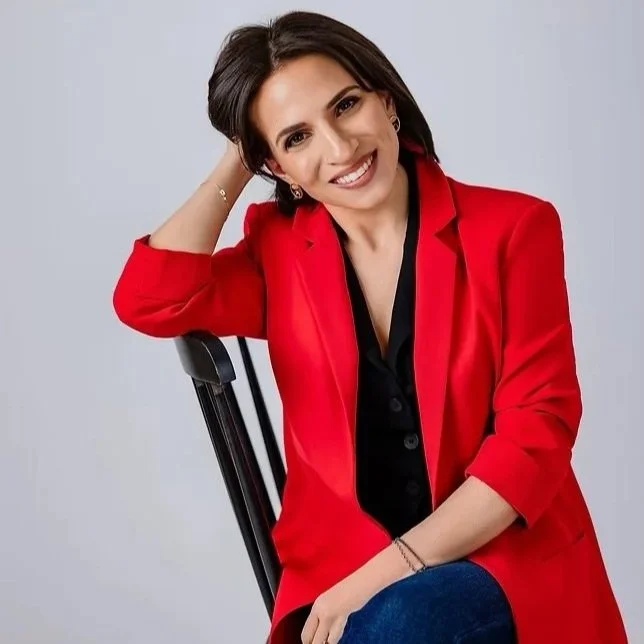
Dr. Miri Bar-Halpern is a clinical psychologist, trauma specialist, and Lecturer in Psychology at Harvard Medical School. Her work focuses on traumatic invalidation, antisemitism, identity-based trauma, and radicalization prevention. She develops trauma-informed approaches to strengthen Jewish belonging and help K–12 schools better support students experiencing antisemitism and identity-based harm.
Liz Berger is a scholar and practitioner whose work within Neurodivergence spans more than two decades and includes public and independent school contexts and medical institutions with child and adult populations. She works as a Research Consultant with UNESCO on international projects that implement antisemitism education training for educators and policymakers globally. She is a PhD student in Antisemitism Studies at Gratz College, and her research focuses on inclusion building and strengthening when advocating for multiply marginalized people.
Dr. Elizabeth Joy Erwin is Professor at Montclair State University, New Jersey where she prepares graduate and doctoral teacher education students to think critically, reflect deeply and teach inclusively. Her work has been shaped by disability-justice and equity-based teaching in early childhood — locally, nationally, and globally.
Zahava Feldstein is an educational strategist, curriculum designer, scholar, and translator of ideas whose work and research span Ethnic Studies and Jewish Studies. Her expertise centers on teaching complex and contested subjects through historically grounded, inquiry-based approaches and building frameworks that enable meaningful engagement across political and intellectual differences. She holds an M.A. in Divinity from the University of Chicago and an M.A. in Education from Stanford University, where she was a Jim Joseph Doctoral Fellow, and is completing a Ph.D. in Antisemitism Studies at Gratz College. A Postdoctoral Fellow at the London Center for the Study of Contemporary Antisemitism, she has published in the Journal of Contemporary Antisemitism, Times of Israel, Moment Magazine, and Tikkun on Ethnic Studies, antisemitism and racialization, critical pedagogy, collective memory, Jewish history, including Zionism and anti-Zionism, diaspora, and contemporary public discourse. She currently leads strategic initiatives across K–12 and higher education focused on Ethnic Studies, Jewish inclusion and antisemitism education, including editing the ES Resources Educator Bulletin, developing original curriculum, and launching the Ethnic Studies Curriculum Innovation Fellowship for California educators.
Dr. Jennifer Goldstein's areas of specialization are educational leadership and policy, in particular at the intersection of teacher leadership. Her work focuses on improving the quality of teachers and teaching in schools serving children living in poverty and children of color.
Dr. Deborah Greenblatt is an Associate Professor of Multicultural Early Childhood and Elementary Education at Medgar Evers College, The City University of New York. She has a Ph.D. in Urban Education from The CUNY Graduate Center and is an Academic Engagement Network Faculty Fellow.
Andrea is the Director of Faculty and Community Relations for Hillel at UCLA. She is grateful for the opportunity to bring her extensive experience as a higher education administrator, as well as a background in Jewish communal work to support Jewish faculty (and staff) and work with the community to combat antisemitism at UCLA, and higher education as a whole. Andrea was active at the Hillel at the University of Pennsylvania, and while there was able to work with a theater group that enabled observant Jewish students to participate in performing arts while still being able to celebrate Shabbat and all chagim. Most recently, Andrea was an award-winning administrator at Pepperdine University in Malibu, CA where she supported students and faculty for over 20 years.
Vikki Katz is Professor and Fletcher Jones Foundation Endowed Chair in Free Speech at Chapman University in Orange, CA. She is also Executive Director of Or Initiative, a new program dedicated to developing evidence-based alternatives to how young people (dis)engage with each other over contentious and complex issues, including the Middle East conflict and rising U.S. antisemitism, in a digital age.
Sivan Komatsu is a school psychology PhD candidate at the University of Washington, and she is completing her predoctoral internship at Cognitive and Behavioral Consultants in White Plains, NY. Sivan previously worked as the school psychologist at Northwest Yeshiva High School, a Jewish high school near Seattle.
Aryah Somers Landsberger is a systems change strategist with more than 25 years of experience spanning research, law, philanthropy, public policy, and organizational strategy. Her research examines how school culture and organizational decision-making influence the implementation of policies and interventions intended to address antisemitism and strengthen Jewish belonging in K–12 schools.
Lori Ann Laster is a PhD Candidate in Curriculum and Instruction at the University of Minnesota. Her scholarly path into Jewish studies began in theater, where she specialized in dramaturgy and the history of antisemitic stereotypes on the stage: work that produced "Anatomy of a Stereotype" and earned her a Jerome Foundation Fellowship.
Jana Lo Bello Miller is a Senior Lecturer in the Department of Curriculum & Instruction at the University of Minnesota-Twin Cities where she teaches elementary preservice teachers. Her teaching aligns with her scholarly interests around equity-based practices in teacher preparation, climate literacy, and writing pedagogies.
Dr. Keitha-Gail Martin-Kerr is a Teaching Professor and Associate Chair for Strategic Impact in the Department of Curriculum and Instruction at the University of Minnesota. Her scholarship is situated at the intersection of collective memory work, feminist pedagogy, and teacher education, and she approaches teaching as both an intellectual and relational practice, with a sustained commitment to equity, humanization, and belonging.
Liz McCallum, PhD, is a Professor and Chair of the Counselor Education and School Psychology Department at Duquesne University. Her research has focused on developing evidence-based academic and behavioral interventions for K-12 students. More recently, she has collaborated with colleagues on projects supporting Jewish students in schools. Dr. McCallum serves on the Board of Trustees at her synagogue and as a faculty advisor for the Jewish student association at her university, and she is interested in mentoring early career Jewish faculty on issues of belongingness within the social sciences.
Dr. Alon Milwicki is a historian and lead antisemitism analyst and researcher whose career spans intelligence, academia, entertainment, and the nonprofit sector. He holds a PhD in History from American University, where his dissertation examined the origin and spread of twentieth-century American white supremacy, neo-Nazism, and Holocaust denial, and his peer-reviewed work has appeared in the Journal of Hate Studies. An article of his is forthcoming in the inaugural issue of DISCOURSE: Research on Ideology, Hate, and Tolerance, published by the Antisemitism Research Initiative at George Washington University, and he is completing a book on Wesley Swift and the institutionalization of Christian Identity theology. He taught U.S. and Holocaust history for nearly a decade at Collin College, El Centro College, and Texas A&M University–Commerce — developing original courses on Holocaust history and on race and racism in America, mentoring students, and bringing Holocaust survivors into classrooms — and was named El Centro's Adjunct Faculty of the Year. He has written extensively on Holocaust education, historical revisionism, and antisemitism in American schools, and serves on the board of the Gulf Coast Center for Holocaust and Human Rights Education.
Rebecca Muhlbauer is a third-year doctoral student in School Psychology at the University of Kentucky. She is currently conducting a study measuring antisemitism among school psychologists. Her research goals seek to identify factors associated with antisemitism in schools, explore its impact on students and schools, and investigate how it can be effectively addressed and prevented.
Rabbi Dr. Meir Muller is the Associate Dean of Community Empowerment at the College of Education, University of South Carolina. His research focuses on Pro-Blackness and Pro-Jewishness in education, combating antisemitism, anti-racist pedagogies, and early childhood education.
Daniel S. Newman, PhD, is a Professor and Program Coordinator of the School Psychology Program at the University of Cincinnati, as well as a licensed psychologist and Nationally Certified School Psychologist. His research, teaching, and service focus on school consultation, professional supervision, and issues in school psychology.
Emma Nicosia (she/her) is a fifth-year doctoral candidate in the Department of Curriculum and Instruction at the University of Minnesota. Her research employs qualitative methods to understand how Christian hegemony and antisemitism impact educational experiences.
After more than three decades of practicing law, Bruce Ogron retired in 2021 to concentrate exclusively on his true passion - Jewish education. Bruce teaches children and adults at his synagogue in suburban Chicago with students ranging in age from 8-80. His courses cover on a variety of topics, most focusing on modern Jewish history and antisemitism. He is also a creator and producer of theatrical performances designed to teach Jewish students through the arts.
Leslie Z. Paige, Ed.S., NCSP is a longtime national leader in school psychology who has worked as a PS-12 practitioner, a school psychology graduate educator and program director, and university research administrator, and is currently a Senior Policy Fellow for the Docking Institute of Public Affairs at Fort Hays State University. Leslie has served in numerous leadership positions for the National Association of School Psychologists (NASP), including President (2019-2020), Secretary, Treasurer and has chaired and participated on numerous committees and task forces, and most recently served as Chair of the NASP Professional Growth Committee and the Addressing Antisemitism Task Force.
Jordan Rappaport is an education consultant, curriculum designer, and educator whose work, practice, and research span equity and inclusive education, Jewish identity and peoplehood, and the experiences of Jewish students in K–12 schools. His research interests include anti-Judaism, antisemitism and antizionism, and Holocaust education, while his curriculum and professional learning work focuses on translating complex histories, ideas, and contemporary Jewish experiences into historically grounded, intellectually rigorous, and developmentally appropriate learning, with particular attention to gaps in Holocaust education and Jewish communities and experiences often underrepresented in K–12 education. He is pursuing graduate studies in Antisemitism Studies at Gratz College, with current research examining antizionism and its institutional pathways in K–12 education, including how ideas acquire legitimacy and move through educational institutions into curriculum and professional practice. Drawing on more than two decades in public education, his work bridges research and practice to deepen understanding of Jewish life and experience while advancing access, inclusion, and belonging for all students, including Jewish
Malka Shaw, LCSW, is a licensed clinical social worker in private practice with over 25 years of experience treating trauma, specializing in work with adolescents and their parents. She is the founder of Kesher Shalom Projects, where her work sits at the intersection of clinical trauma treatment, Jewish cultural humility, and antisemitism education. She developed the BRIDGE Protocol, a framework for working with youth and adults affected by indoctrination and radicalization, and ORAH, a parent-facing framework for raising resilient, proudly identified Jewish children amid rising antisemitism. She has written for Sapir, The Times of Israel, and The Jerusalem Post. She holds an MSW from Yeshiva University's Wurzweiler School of Social Work and is licensed in New Jersey, New York, and Florida. She is interested in connecting with researchers and practitioners working to translate emerging evidence into practice for Jewish students in K through 12 settings.
David Shriberg, PhD, is a Professor of School Psychology, Chair of the Department of Applied Psychology in Education and Research Methodology, and an Affiliated Faculty of the Institute for the Study of Contemporary Antisemitism at Indiana University. His research focus is supporting Jewish youth in K-12 schools, with an emphasis on systems-level consultation and working directly with Jewish youth.
Andrea Harris
Andrea is the Director of Faculty and Community Relations for Hillel at UCLA. She is grateful for the opportunity to bring her extensive experience as a higher education administrator, as well as a background in Jewish communal work to support Jewish faculty (and staff) and work with the community to combat antisemitism at UCLA, and higher education as a whole. Andrea was active at the Hillel at the University of Pennsylvania, and while there was able to work with a theater group that enabled observant Jewish students to participate in performing arts while still being able to celebrate Shabbat and all chagim. Most recently, Andrea was an award-winning administrator at Pepperdine University in Malibu, CA where she supported students and faculty for over 20 years.
Bruce Ogron
After more than three decades of practicing law, Bruce Ogron retired in 2021 to concentrate exclusively on his true passion - Jewish education. Bruce teaches children and adults at his synagogue in suburban Chicago with students ranging in age from 8-80. His courses cover on a variety of topics, most focusing on modern Jewish history and antisemitism. He is also a creator and producer of theatrical performances designed to teach Jewish students through the arts.